TL;DR
- Zoning: Use rugs and furniture placement to define separate living areas.
- Privacy: Implement bookshelves or curtains to hide the sleeping nook.
- Verticality: Maximize wall space with tall shelving and lofted beds.
- Flow: Maintain clear walkways to prevent the space from feeling cramped.
Living in a studio apartment is a masterclass in spatial efficiency. Without walls to separate your activities, the burden of organization falls on your furniture and decor choices. The goal is to create a “visual map” of the home that allows you to transition from work mode to relaxation mode effortlessly.
Planning a studio layout follows many of the same rules as creative small apartment ideas, where every inch of floor space is considered precious. By borrowing techniques from professional organizers—like the systems found in sewing room organization tips—you can ensure that even the smallest studio remains productive. These 15 layout ideas provide a professional blueprint for making your one-room home feel like a multi-room suite.
Bookmark this guide for quick reference.
Key Takeaway: Successful studio living relies on psychological “zoning” and multi-functional furniture to define distinct areas for rest, work, and social life.
15 Functional Studio Layout Ideas
In a studio, layout is everything — the right zoning makes one room feel like several. These fifteen ideas use dividers, lofts, and clever furniture placement to separate sleeping, working, and living without walls.
1. The Bookshelf Room Divider
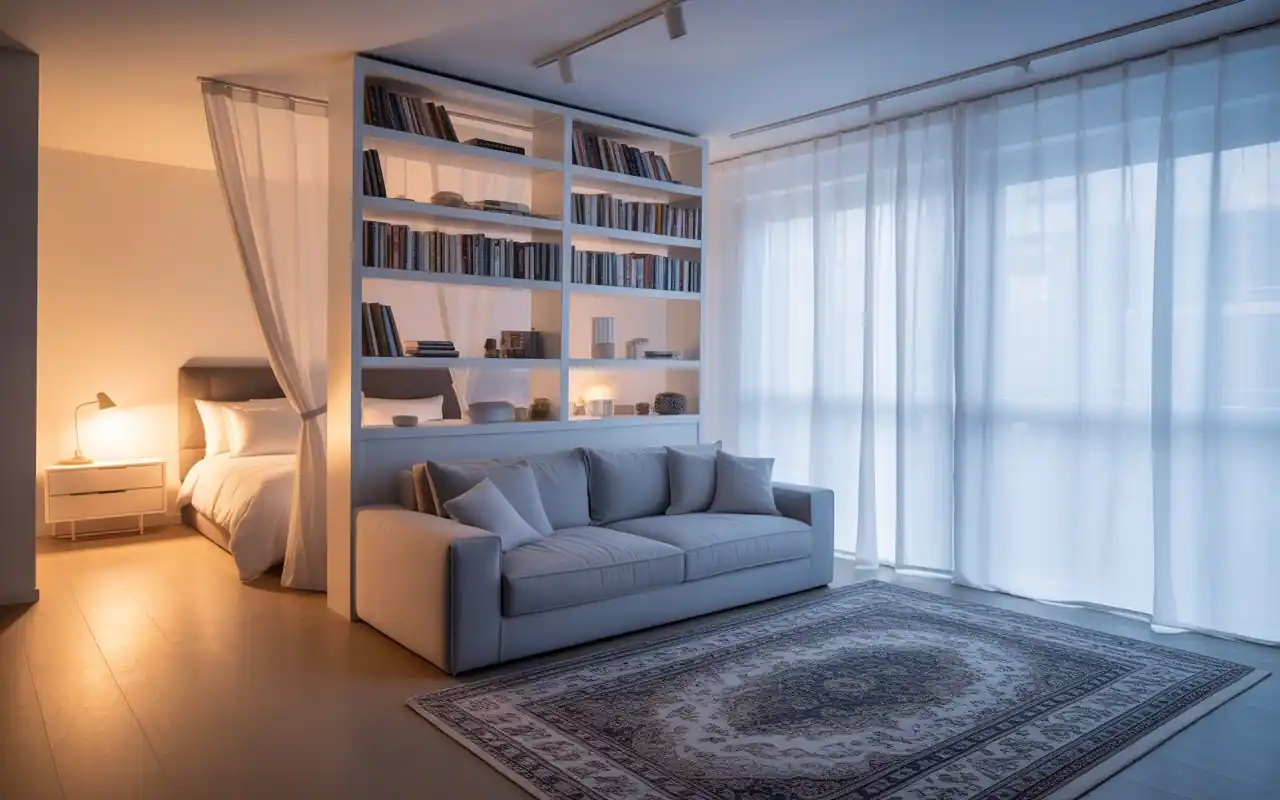
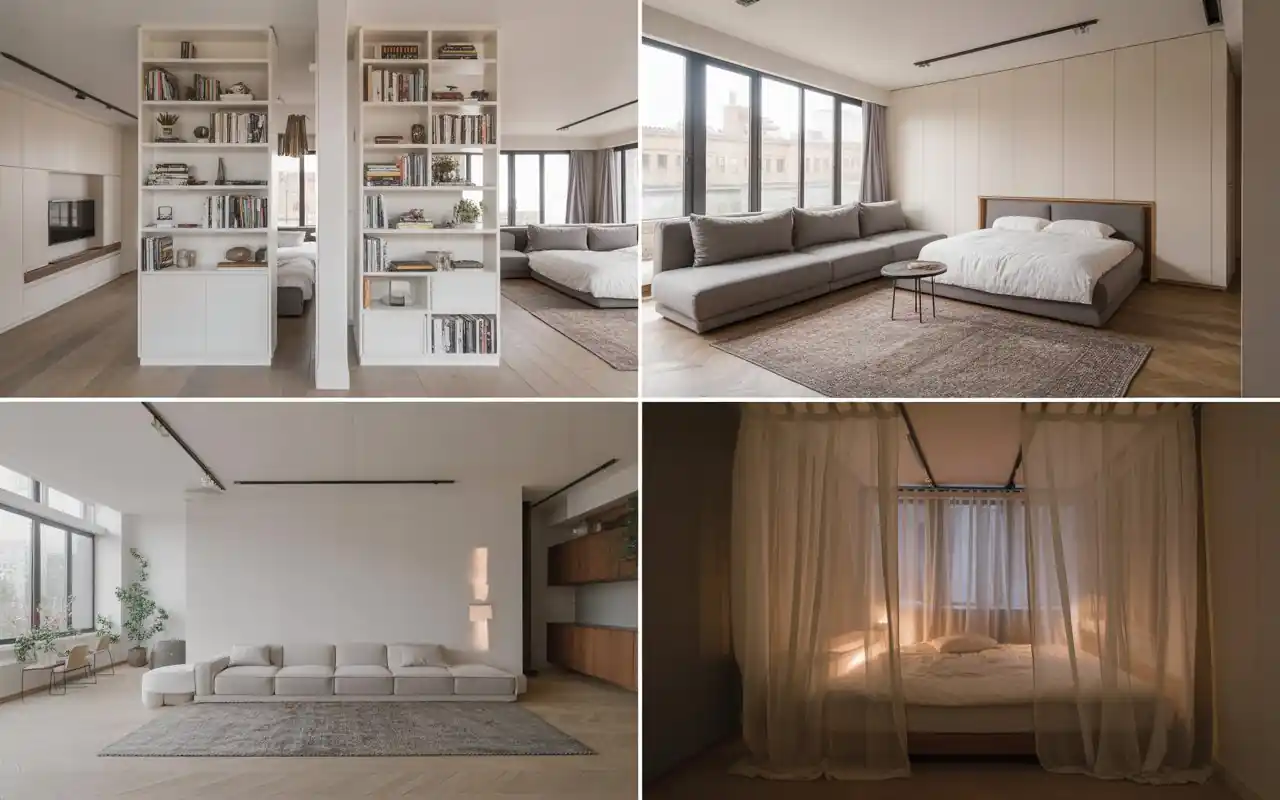
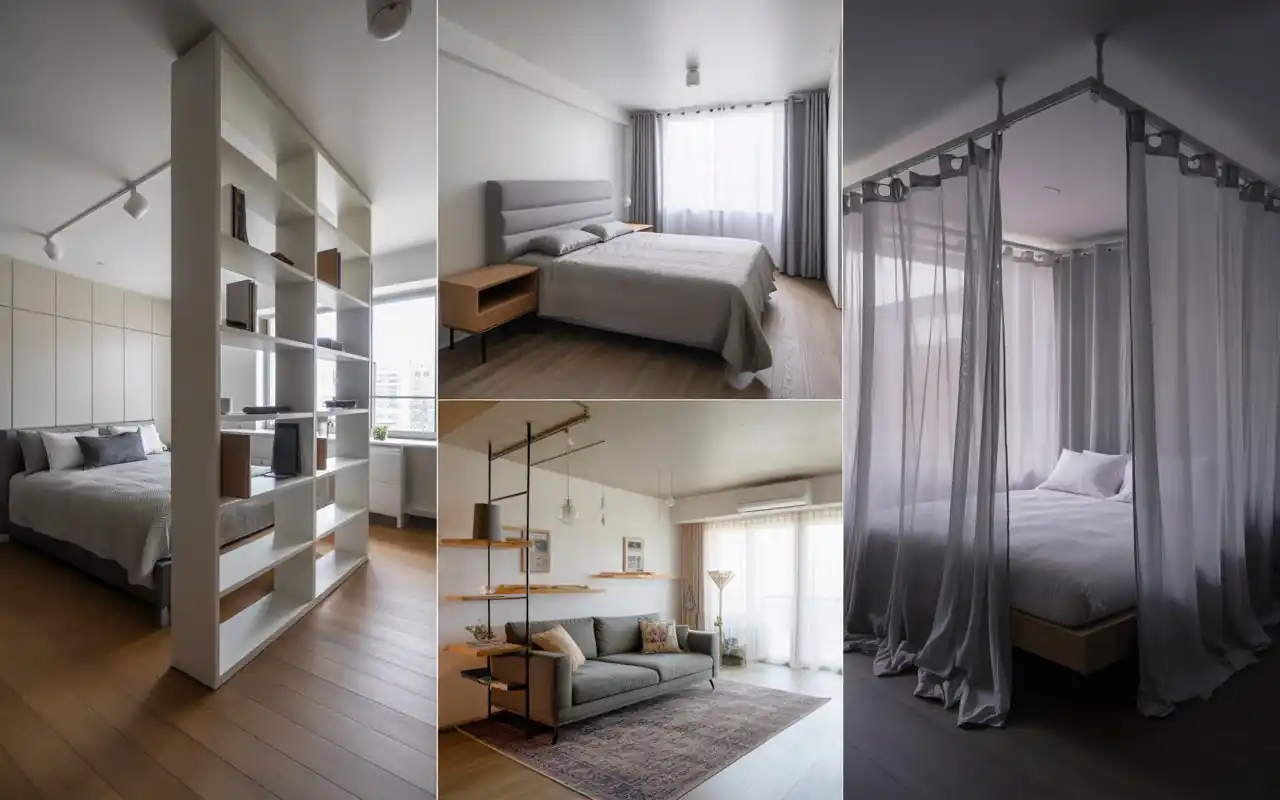
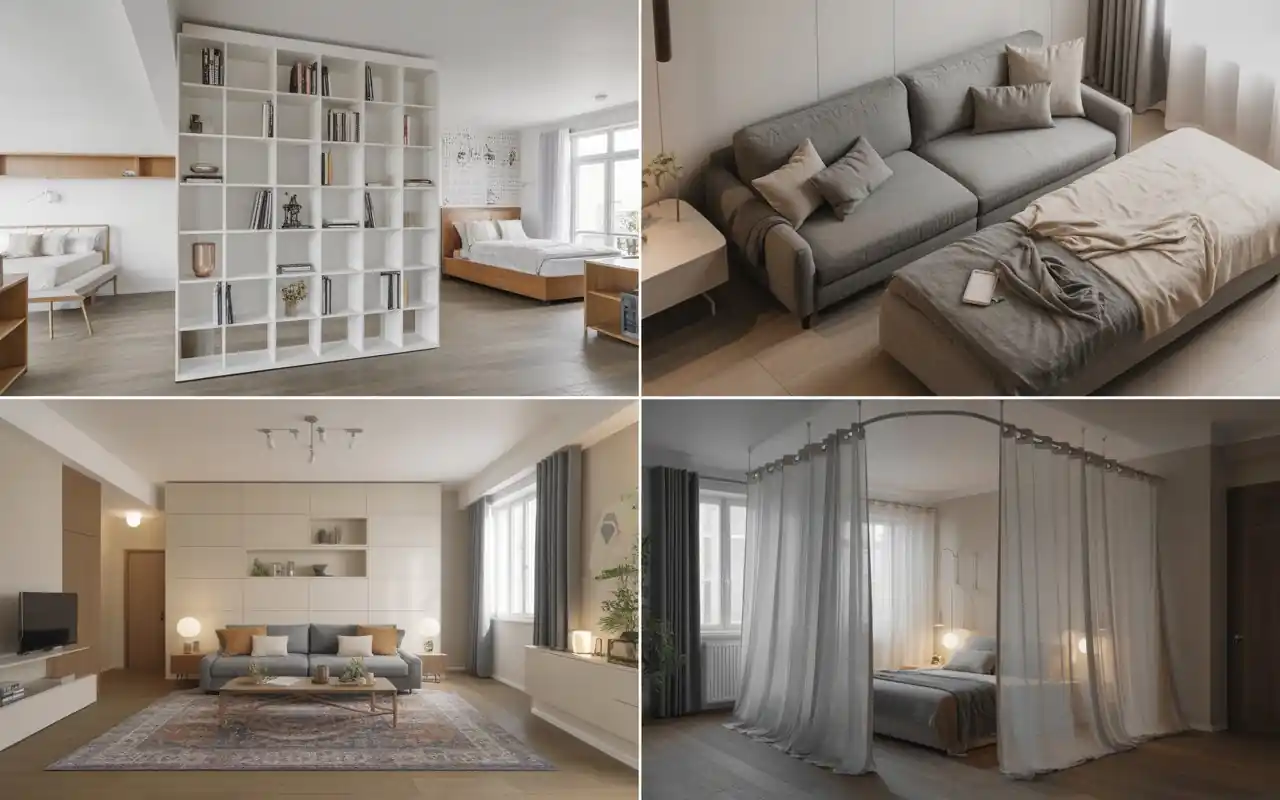
Use an open-backed bookshelf to separate your bed from the living area. This provides massive vertical storage while allowing light to pass through. It creates a physical boundary without the permanence of a wall, a trick often used in small bedroom refresh ideas to add privacy.
2. Back-to-Back Furniture Placement
Place your sofa with its back against the foot of your bed. This creates two distinct zones: one for lounging and one for sleeping. It’s a classic layout that maintains a clear line of sight across the room, making the apartment feel longer.
3. The Lofted Sleep Sanctuary
If you have high ceilings, a lofted bed is a game-changer. By moving the sleeping area upward, you free up the entire floor below for a full-sized desk or a cozy sofa setup. This is the ultimate way to apply creative small apartment ideas in a vertical direction.
4. Floating Sofa Layout
Instead of pushing your sofa against the wall, “float” it in the middle of the room facing away from the kitchen. This defines the living room as its own separate island. Use a rug underneath to ground the zone, much like the rug strategies in neutral coastal living room ideas.
Designer Tip: Ensure there are at least 30 inches of walking space around the floating sofa to maintain a comfortable flow throughout the room.
5. The Corner “Cloffice”
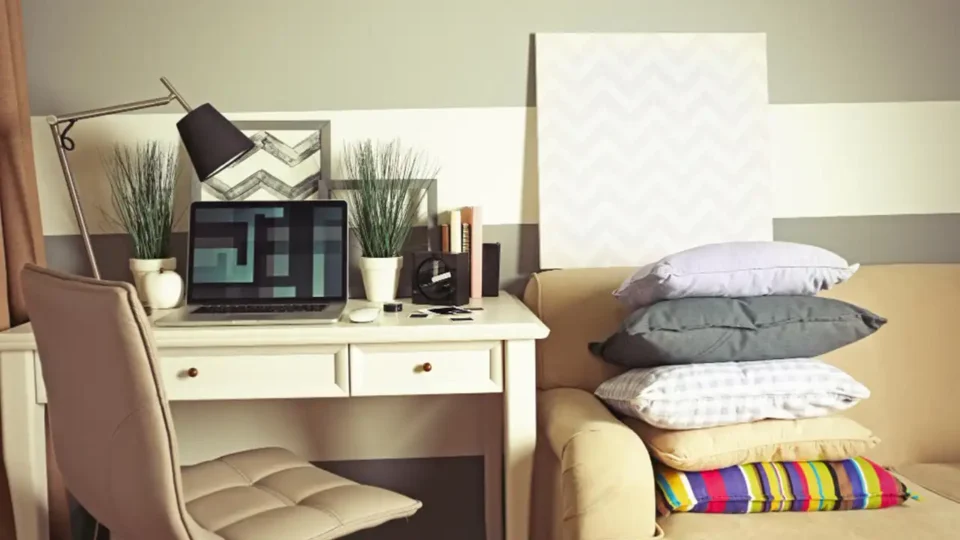
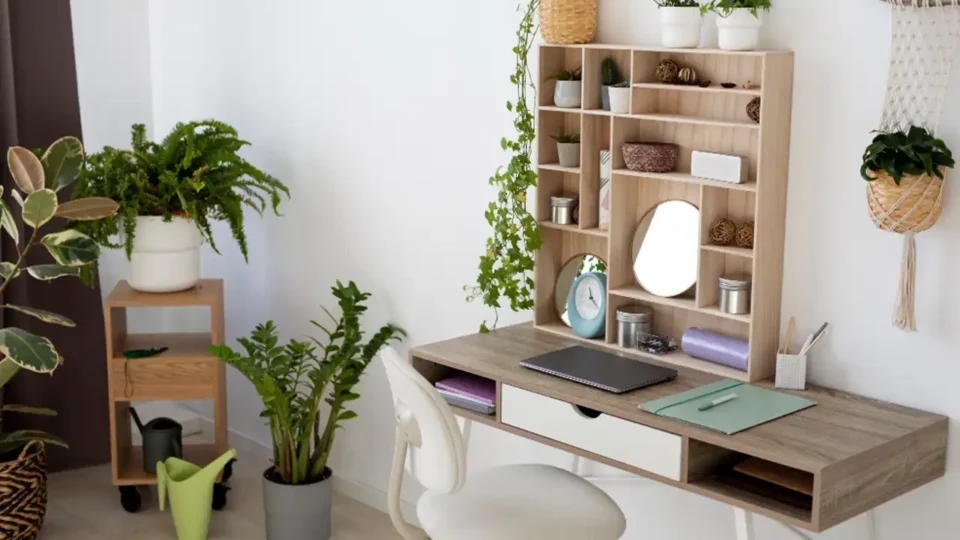
Convert a closet into a home office or tuck a small desk into an unused corner. Positioning your workspace away from the bed is vital for maintaining productivity. For inspiration on compact setups, look at productive home office ideas.
6. Curtained Sleeping Nook
Install a ceiling track and hang heavy, floor-to-ceiling curtains around your bed. This allows you to “shut the door” on your bedroom when guests arrive. Using light-colored sheers, similar to elegant spring bedroom decor ideas, keeps the space from feeling too heavy.
7. L-Shaped Sectional Zoning
An L-shaped sectional sofa naturally creates a “corner” in an open space. Use the long end of the sofa to block off the kitchen or the bedroom area. It provides plenty of seating for guests without requiring multiple separate chairs.
8. The Murphy Bed Solution
For ultra-small studios, a Murphy bed that folds into the wall during the day is the best way to reclaim square footage. When the bed is up, the area can serve as a dining room or an exercise space, offering maximum flexibility.
Designer Tip: Choose a Murphy bed with built-in shelving or a desk on the underside to add even more functionality to the wall unit.
9. Entryway Drop Zone
Even a studio needs a dedicated entrance. Place a small console table and a mirror near the door to define the foyer. This prevents bags and keys from migrating to the kitchen counter, following the logic of spring entry-way decor ideas.
10. Kitchen Island Dining
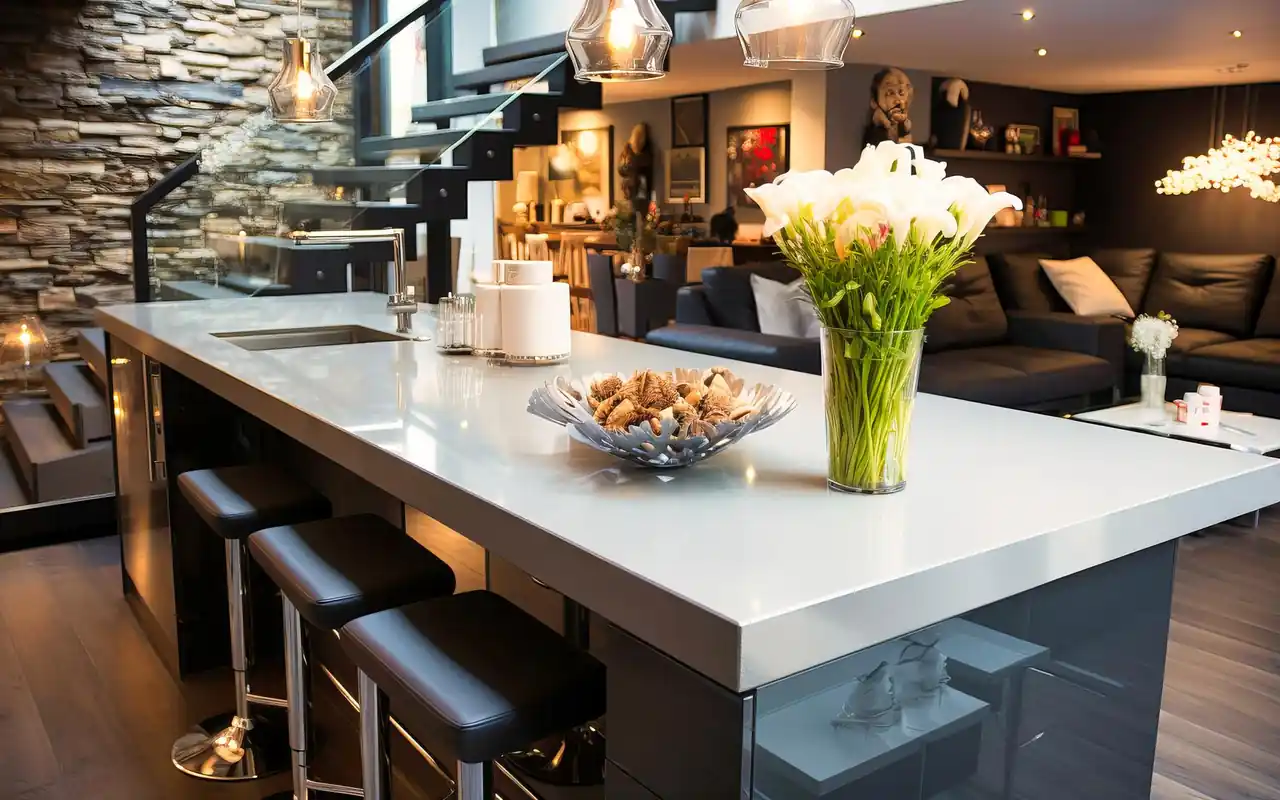
If your studio lacks a dining room, use a tall kitchen island with bar stools. This provides extra prep space for cooking and serves as a transition point between the kitchen and the living zone.
11. Symmetrical Layout for Balance
If your studio is a simple rectangle, place the bed and the sofa on opposite walls with a central “walkway” in the middle. This creates a sense of order and balance that is very soothing in small environments.
12. Using Vertical Wall Art
Draw the eye upward with a vertical gallery wall or a tall wall-hanging craft ideas piece. Tall art makes the ceilings feel higher and prevents the furniture from looking like it’s “huddled” on the floor.
13. Transparent Acrylic Accents
Use acrylic or glass coffee tables and chairs. Because they are transparent, they don’t block the visual flow of the room, helping the floor plan feel less crowded while still providing necessary surfaces.
14. Rug Layering for Zones
Place different rugs in the living and bedroom areas. For example, use a plush rug for the bed and a flat-weave rug for the living room. This creates a psychological boundary that clearly separates “rest” from “activity.”
15. Minimalist Window Bench
If you have a large window, install a low bench or a row of cabinets underneath it. This provides extra seating and storage without blocking natural light, a common strategy in modern balcony decoration ideas for small terraces.
Key Takeaway: A functional studio layout uses every available inch—from floor to ceiling—to define distinct areas for different daily tasks.
Balancing Privacy and Openness
The biggest challenge in a studio is the lack of a private bedroom. If you frequently host guests, prioritizing a divider—whether it’s a bookshelf, a screen, or curtains—is essential. For those who live alone and rarely entertain, an open-concept layout may feel more luxurious and airy.
When planning your zones, consider the lighting. Much like the layered approach in cozy winter decor ideas, each area of your studio should have its own light source. A lamp by the bed, a task light for the desk, and a bright light over the what to put on top of kitchen cabinets zone ensure the room stays functional after sunset.
Key Takeaway: Use lighting and furniture orientation to maintain a balance between a social open-plan feel and private rest areas.
Common Studio Layout Mistakes to Avoid
- ❌ Pushing All Furniture Against Walls → ✅ Float the sofa or bed slightly to create a sense of depth and better traffic flow.
- ❌ Using Small-Scale Furniture → ✅ A few large, high-quality pieces look better and feel more permanent than a dozen tiny, “dorm-style” items.
- ❌ Blocking Natural Light → ✅ Keep dividers low or transparent near windows to ensure the entire studio stays bright.
- ❌ Ignoring the Entryway → ✅ Without a defined entrance, the entire apartment can feel like it’s “in the hallway.”
Key Takeaway: Avoid the “waiting room” look by grouping furniture into intentional islands rather than lining the walls.
Budget & Cost
Maximizing a studio layout is more about furniture arrangement than expensive renovations.
| Project | Estimated Cost | Impact Level |
|---|---|---|
| Open Bookshelf Divider | $60 – $200 | High |
| Ceiling Curtain Track | $30 – $80 | Very High |
| Area Rugs (Set of 2) | $100 – $300 | High |
| Floating Wall Desk | $50 – $150 | Medium |
Key Takeaway: You can completely transform a studio layout for under $500 by investing in a few key “zoning” pieces like rugs and dividers.
Decisions & Layout Challenges
If your studio has an awkward shape, such as an L-shape or alcoves, use the “nooks” for the most private activities like sleeping. If you are converting a larger space, like a modern basement living and storage ideas area into a studio, ensure you address humidity and lighting first to keep the space feeling residential.
Layout Checklist
- Bed is positioned in the quietest, darkest corner.
- Desk has access to natural light.
- Rugs define at least two separate “zones.”
- Walkways are at least 30 inches wide.
Key Takeaway: Prioritize your most frequent activities—if you work from home, the desk gets the best light; if you love to cook, the kitchen needs the best flow.
FAQ’s
Conclusion
Studio living is a rewarding challenge that forces you to be intentional with your space and your belongings. By using furniture to create boundaries and maintaining a clear, open flow, you can turn a single room into a sophisticated, multi-functional home.
Next Steps:
- Draw a floor plan of your studio and identify your “work,” “sleep,” and “living” zones.
- Move your sofa away from the wall to see if a “floating” layout improves the flow.
- Invest in a tall bookshelf or a curtain track to add privacy to your bed area.
- Use different rugs to ground each area and create a sense of separate rooms.