TL;DR
- Swap harsh fluorescent overheads for warm-toned desk lamps to reduce eye strain.
- Introduce “real-touch” greenery or low-maintenance plants to boost mood and air quality.
- Use a cohesive color palette of warm greige and matte black to maintain a professional look.
- Layer textiles like a small linen pillow or a high-quality desk mat for tactile comfort.
Creating a Professional Sanctuary in the Workplace
To decorate your office at work effectively, you must balance personal expression with professional boundaries by using high-quality materials and a restrained color palette. The most direct way to soften a sterile workspace is to introduce organic elements like wood and stone alongside soft, layered lighting. Integrating expert home decor principles ensures that your desk doesn’t just look “cluttered” with photos, but rather “styled” with intention. A successful setup prioritizes your mental well-being and physical comfort, turning a standard cubicle into a high-performance hub.
When you look for productive home office ideas for inspiration, you will find that the most effective environments use “zones.” Even on a small desk, you can create a zone for tech and a zone for analog tasks. This is a common strategy found in man cave office ideas where focus and relaxation must coexist. By choosing a few high-impact pieces—like a brushed brass lamp or a ceramic vase—you can shift the energy of your entire workday. Bookmark this guide for quick reference.
KEY TAKEAWAY: A successful office refresh relies on replacing industrial materials with organic textures and soft lighting to create a residential feel.
12 Ways to Decorate Your Office at Work
A few small changes can make your work desk feel far more inviting. These twelve ideas — better lighting, living greenery, and curated personal touches — upgrade your office within any corporate guidelines.
1. Swap the Lighting
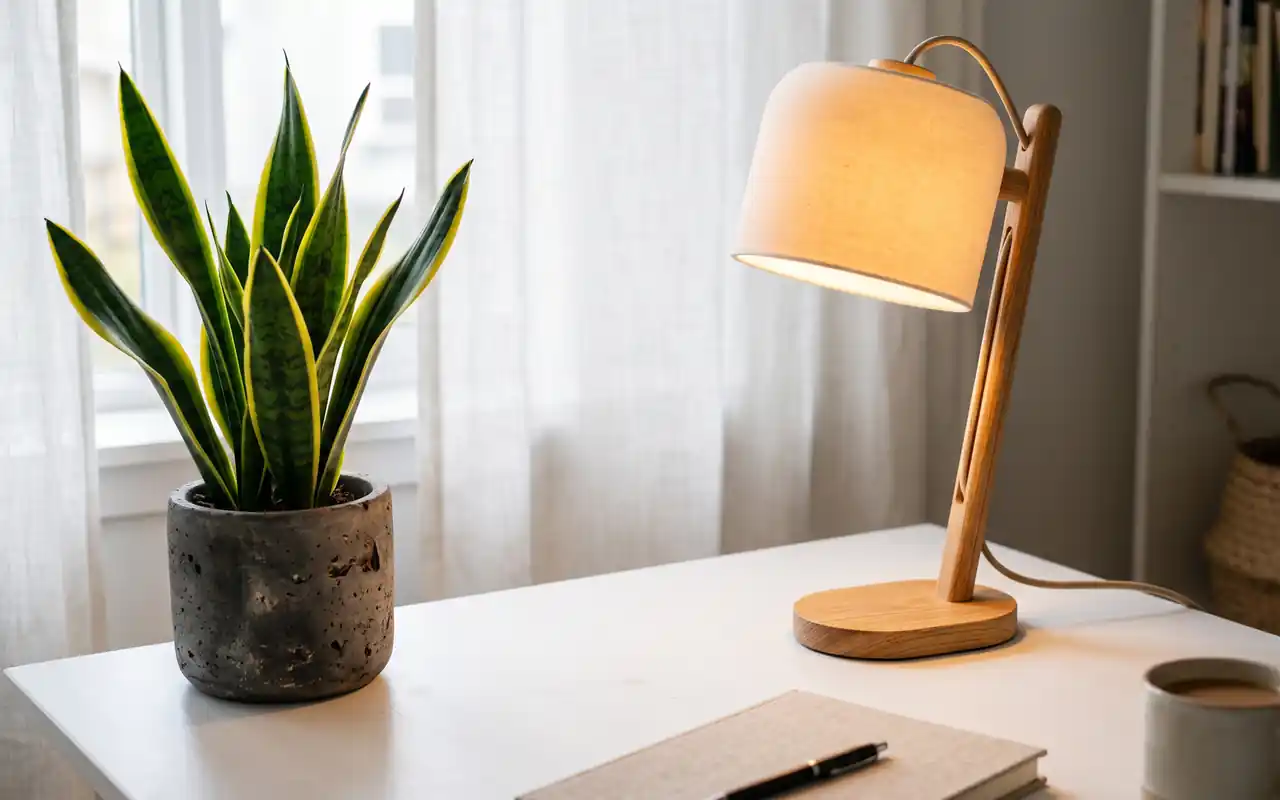
Harsh corporate lighting is the primary cause of workplace fatigue. To decorate your office at work with a designer’s eye, bring in a dedicated desk lamp with a warm 2700K LED bulb. Look for a lamp with soft oak accents or a matte black finish to ground the space. This secondary light source creates a “pool of light” that defines your personal area and makes it feel private. Proper lighting is the fastest way to make a cubicle feel like an executive suite.
2. Introduce Living Greenery
Plants are essential for breaking up the hard lines of office furniture. Choose low-light varieties like a Snake Plant or a ZZ Plant in a high-quality stone planter. If your office has no windows, you can pull from spring shelf styling ideas to learn how to mix high-quality “real-touch” silk stems with architectural objects. Greenery adds life and a vibrant pop of color that improves air quality and significantly reduces stress levels during intense projects.
3. Layer Your Desk Surface
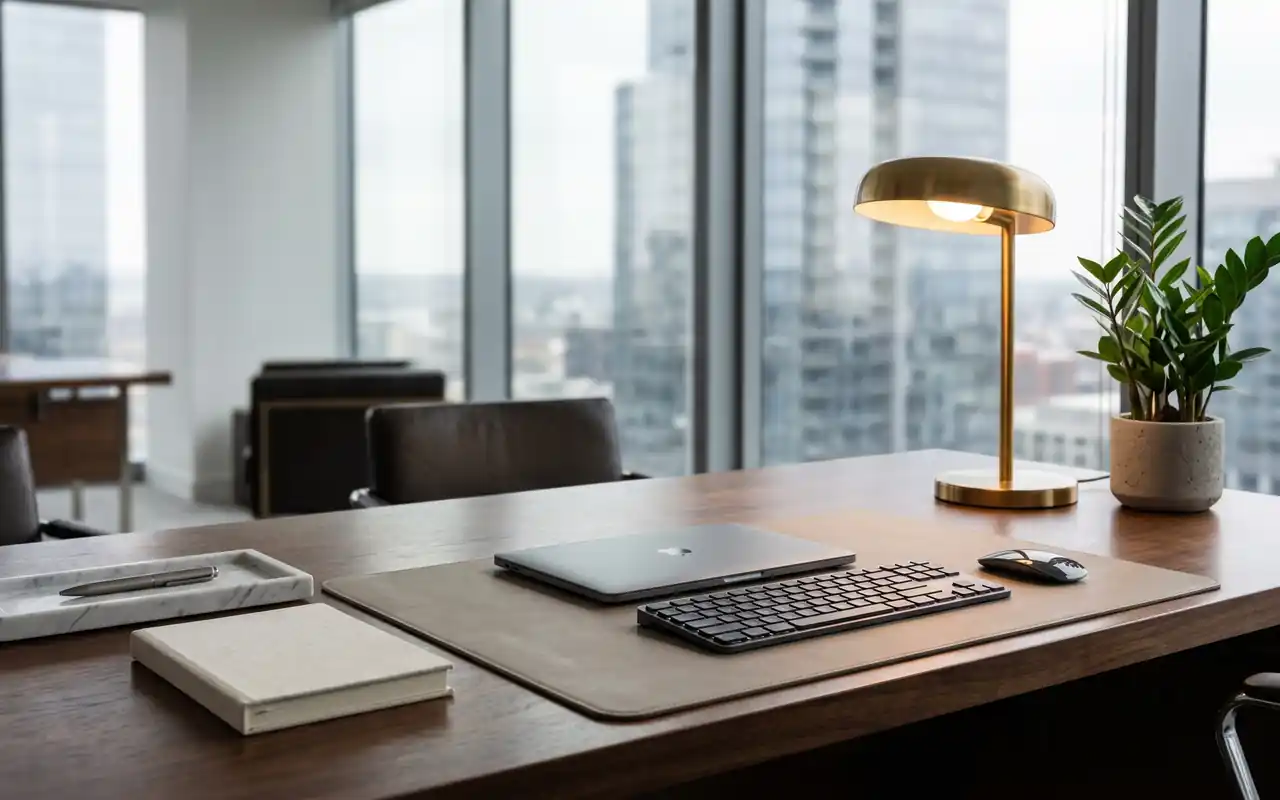
A cold, laminate desk surface feels uninviting. Layer a large, top-grain leather or heavy felt desk mat over your workspace. This adds a soft, textile layer that protects your equipment and provides a comfortable surface for your arms. Choose a mat in a warm greige or charcoal tone to maintain a sophisticated look. This small addition provides a “landing zone” for your keyboard and mouse, making the entire setup look more organized and expensive.
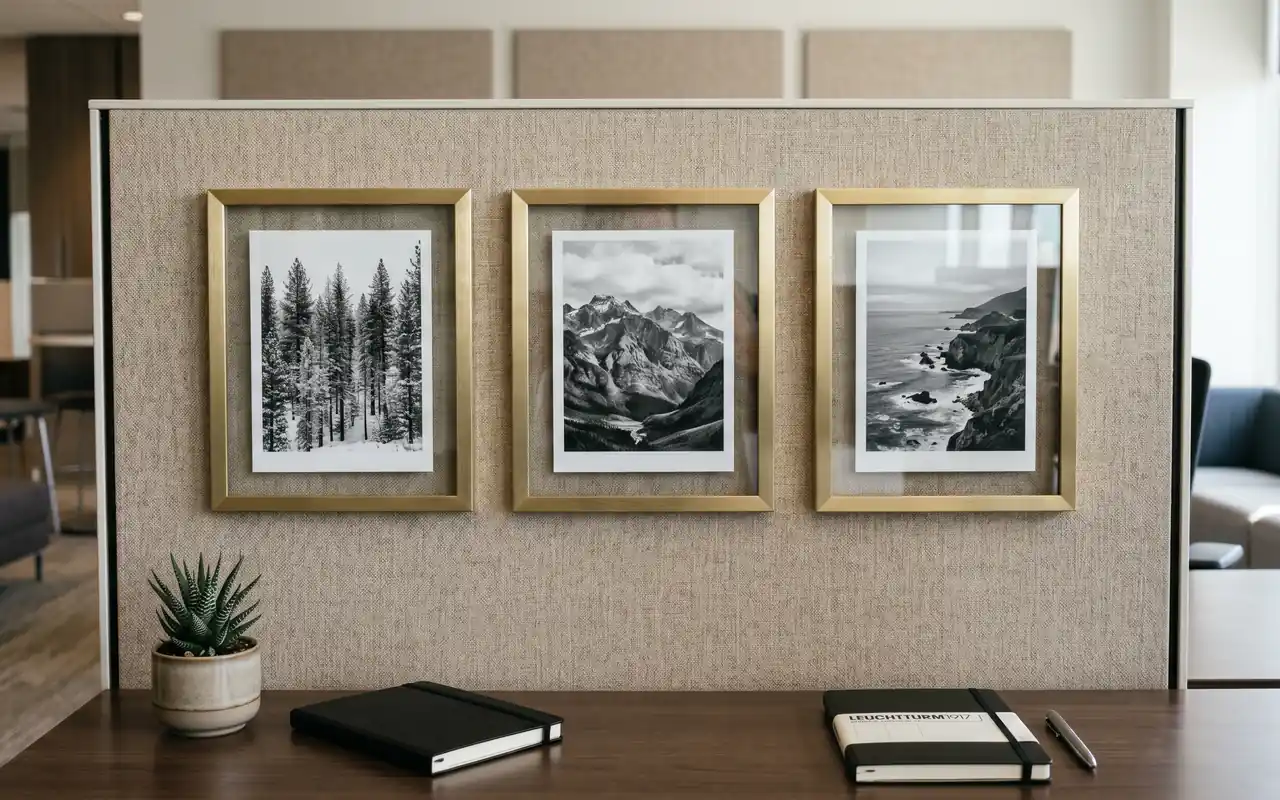
4. Display Curated Personal Art
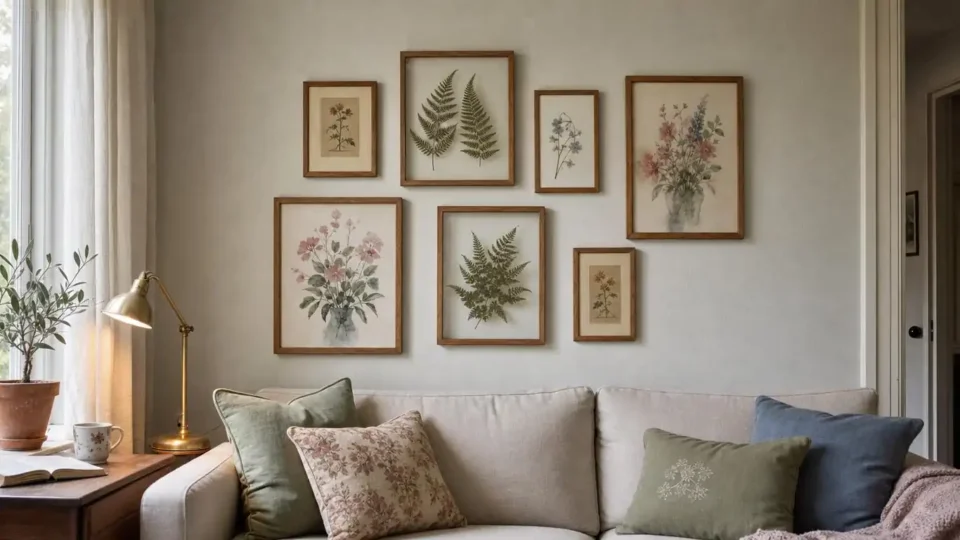
Instead of taping up random snapshots, use high-quality frames in brushed brass or wood to display a few meaningful prints. A grid of three small frames looks much more professional than a single large poster. You can find inspiration in various wall hanging craft ideas to create a unique display that doesn’t damage your office walls. Art provides a mental “window” out of the office, allowing you a brief moment of escape throughout the day.
DESIGNER TIP: Use Command hooks or magnetic clips to hang art so you can easily reset your space without leaving marks on corporate property.
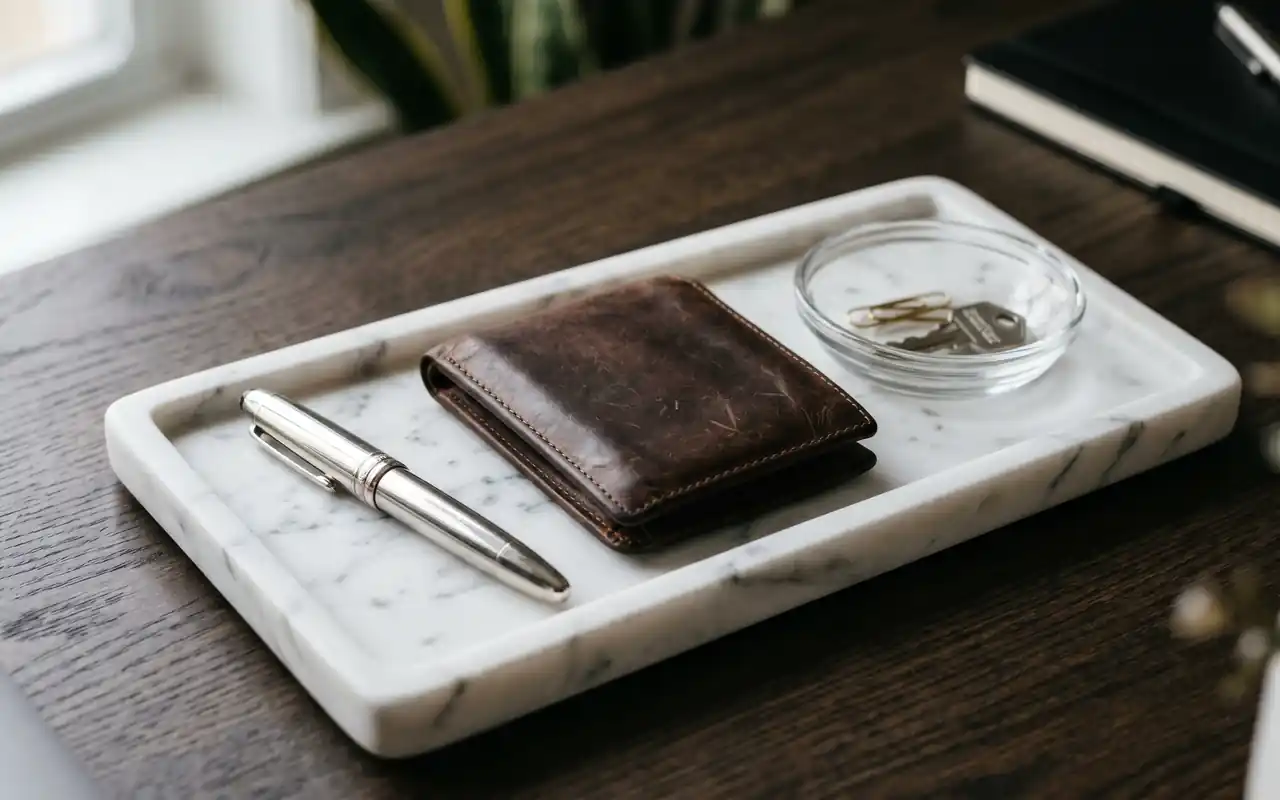
5. Organize with Cohesive Trays
Visual noise is the enemy of productivity. Use a small tray made of wood or marble to corral your daily essentials like pens, paperclips, and a phone charger. This technique is often used in sewing room organization tips to keep small items from migrating across the table. When everything has a designated home, the desk remains clear for actual work. A tray also makes it easy to move your items if you need to clear the desk for a meeting.
6. Add a Textile Accent
If your office chair is standard-issue and uncomfortable, add a small lumbar pillow or a high-quality wool throw. Look for performance fabrics in a linen texture that can withstand daily use while looking refined. This adds a residential softness to the room that mimics the comfort of home. It’s a common tactic used in small man cave ideas to make a small, hard-surfaced area feel much more inviting and plush.
7. Use Professional-Grade Stationery
The tools you use every day contribute to the aesthetic of your space. Replace mismatched plastic pens with a single high-quality metal pen in a brushed brass finish. Use notebooks with linen covers instead of spiral-bound versions. These small details signal that you take your work seriously and value quality. Uniform stationery creates a cohesive look that makes even the most hectic desk appear controlled and intentionally designed.
8. Incorporate Scent and Stones
Since most offices ban candles, use essential oil diffusers or a simple dish of lava stones to provide a subtle, calming scent. A drop of peppermint or citrus oil can help you stay alert without being overwhelming to your colleagues. If you have a small niche, you can place a few smooth river stones in a ceramic bowl to add an earthy, grounding element. These sensory details help to anchor you in your space, making the workday feel more restorative.
DESIGNER TIP: Choose a waterless diffuser for the office to avoid the risk of spills near your electronic equipment.
9. Upgrade Your Tech Hardware
If allowed, swap your standard plastic mouse and keyboard for versions with a more aesthetic design. Mechanical keyboards with customized keycaps in neutral tones can add a satisfying tactile and visual experience to your desk. This level of customization makes your workday feel more personalized and “high-end.” It’s an investment in your primary tools that pays off in both style and ergonomic comfort over years of daily use.
10. Utilize Vertical Space
If you have a cubicle wall, use it for more than just a calendar. Install a small, floating shelf or a modular pegboard system to hold lightweight items. This draws the eye upward and makes your workspace feel larger. You can use these vertical areas to display a single small plant or a sculptural object. Taking advantage of the vertical plane is a secret weapon for maximizing small spaces while keeping the actual desktop clear for your computer.
11. Hidden Cable Management
Nothing ruins a beautiful office setup like a tangle of black power cords. Use cable sleeves, clips, and under-desk trays to hide every wire from view. If your desk has a grommet hole, ensure you are using it effectively to route cables directly to the floor. A clean, wire-free desk looks more professional and reduces mental clutter. This technical organization is a hallmark of high-end design and makes your workspace feel much more serene and modern.
12. Create a “Refresh” Nook
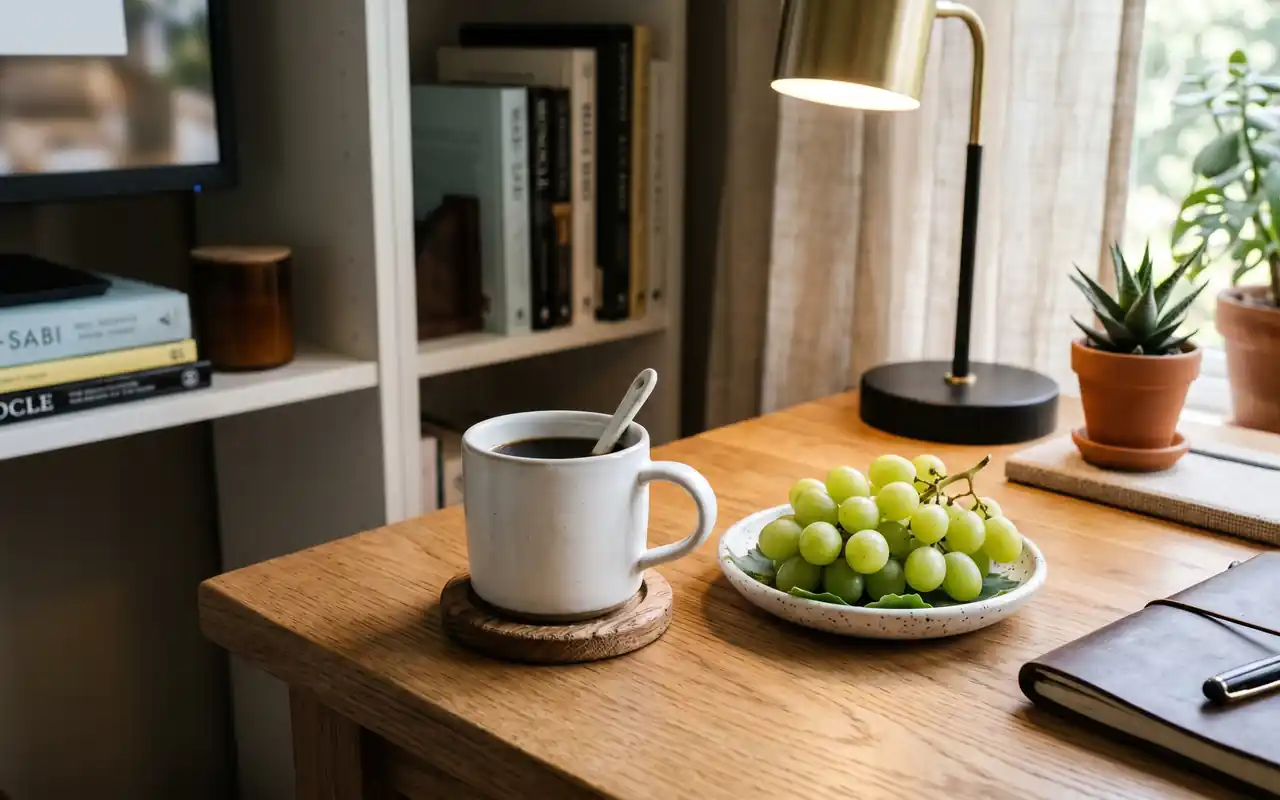
If space permits, dedicate a corner of your desk or a nearby shelf to a “refresh” station. This could include a high-quality ceramic mug, a small tray for your water bottle, and a beautiful dish for healthy snacks. Treating your hydration and nutrition with the same design care as your work tasks elevates your daily routine. It reminds you to take care of yourself, providing a small “home-like” ritual in the middle of a busy corporate environment.
KEY TAKEAWAY: Layering textures, organizing with trays, and prioritizing cable management transforms a generic office into a professional-grade personal retreat.
Balancing Corporate Culture and Personal Style
Decorating an office at work requires a nuanced understanding of your company’s culture. While you want to personalize your space, it should never distract others or compromise safety. If you work in a very traditional environment, focus on high-end “functional” decor like leather desk sets and professional frames. If your office is more creative, you can be bolder with your wall hanging craft choices or plant varieties. The goal is to enhance the professional environment, not compete with it.
Consider the “visual weight” of your items. Too many small objects can make a desk look messy, while a few larger, high-quality items make it look curated. Using a monochromatic color palette—shades of charcoal, navy, or warm greige—allows you to add many items without the space feeling crowded. This level of intentionality shows that you are organized and have a strong attention to detail, which are valuable traits in any professional setting.
KEY TAKEAWAY: Choose high-quality, functional decor that complements your office’s professional standards while reflecting your personal taste.
Common Office Decorating Mistakes to Avoid
- MISTAKE: Over-cluttering with photos → FIX: Use a digital frame or group 2-3 high-quality printed photos in matching frames.
- MISTAKE: Obstructing walkways → FIX: Ensure all decor remains within your designated desk or shelf boundaries.
- MISTAKE: Heavy scented candles → FIX: Use a subtle, waterless diffuser or scented stones to avoid bothering sensitive colleagues.
- MISTAKE: Low-quality lighting → FIX: Invest in a lamp with an adjustable neck and a high-CRI bulb to mimic natural light.
KEY TAKEAWAY: Maintaining clear boundaries and avoiding strong scents ensures your personal sanctuary remains a positive addition to the shared workplace.
Budget & Cost
You can achieve a luxurious office look for very little investment by focusing on a few high-impact areas like lighting and desk mats.
| Project | Estimated Cost | Impact Level |
|---|---|---|
| Designer Desk Lamp | $40–$120 | High |
| Leather Desk Mat | $30–$80 | High |
| Low-Light Potted Plant | $15–$45 | Medium |
| Quality Wall Frames | $25–$60 | Medium |
KEY TAKEAWAY: Prioritize a high-quality lamp and a desk mat for the most significant improvement in daily comfort and style.
Decisions & Workplace Challenges
One of the hardest decisions when you decorate your office at work is choosing which items to prioritize in a limited footprint. If your desk is small, you may need to decide between a plant and a lamp. In these cases, a “hybrid” lamp that has a built-in planter or storage base can be a genius solution. This mirrors the spatial challenges discussed in our small man cave ideas guide, where multi-functional furniture is the key to success.
Another challenge is permanence. Since you don’t own the space, you cannot paint or install permanent shelves. The solution is to use “portable” decor—items that look like they were built-in but can be moved in minutes. Using decorative bookends to create a “shelf” on your desk or leaning art against the wall instead of hanging it are professional ways to work around corporate restrictions. These smart decisions allow you to enjoy a custom space without any long-term commitment.
KEY TAKEAWAY: Use portable, multi-functional decor to maximize your small workspace without making permanent changes to the office.
Frequently Asked Questions
Conclusion
Learning how to decorate your office at work is a rewarding way to improve your professional life and daily mood. By focusing on layered lighting, organic textures, and smart organization, you can transform a generic workspace into a sophisticated and productive sanctuary. A well-designed office is a vital part of beautifying your home and workspace alike, ensuring you are supported in every environment.
Whether you are starting with a blank cubicle or refreshing an old desk, remember that quality always beats quantity. Start with a single high-impact change—like a new desk lamp or a beautiful plant—and build your sanctuary from there. Your workspace should be a place that inspires your best work and reflects the high standards you bring to your career.